





















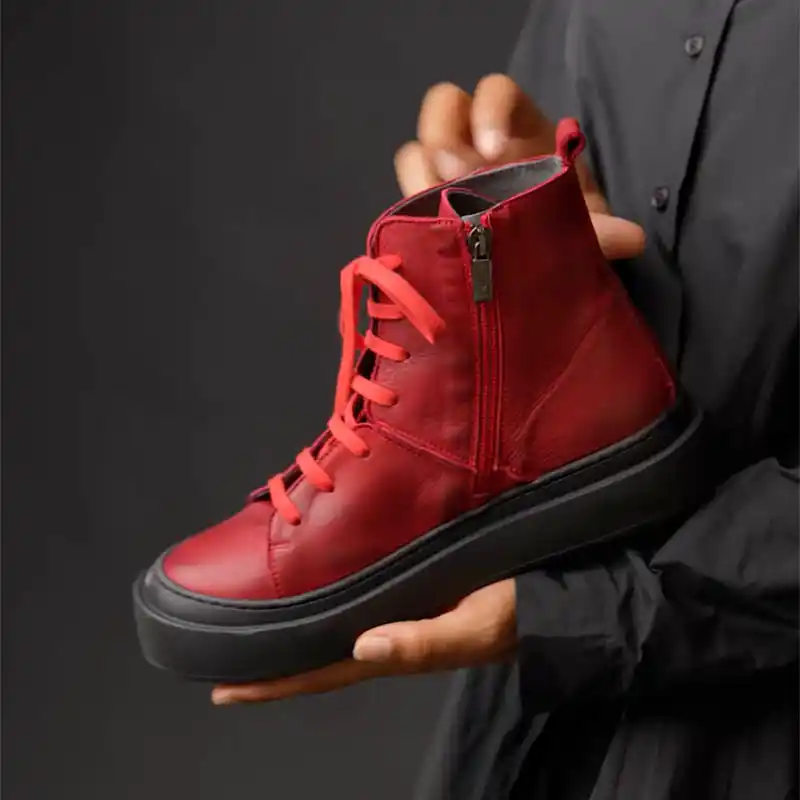
SHOES
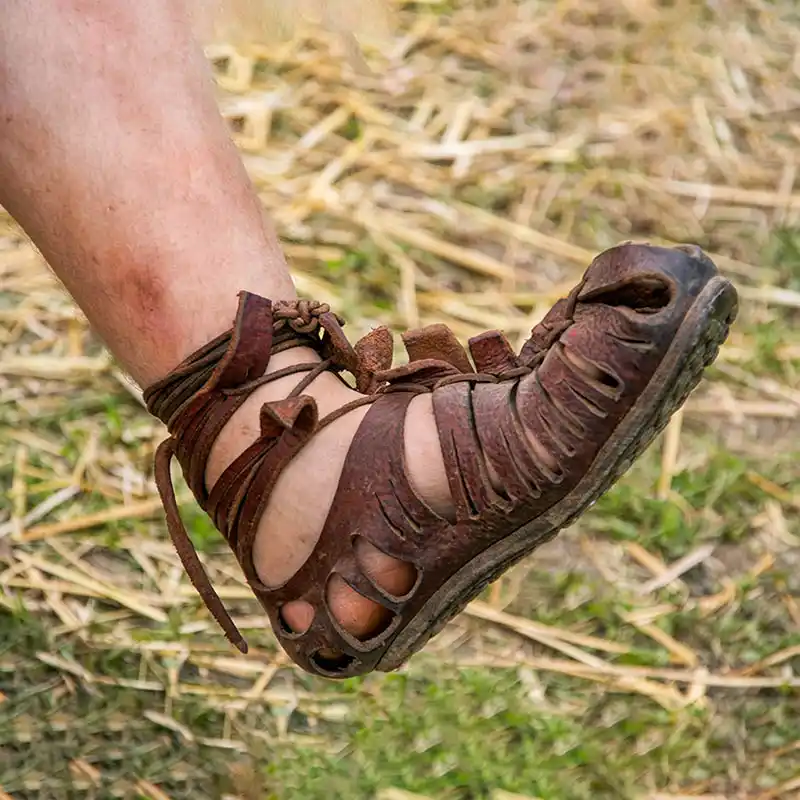
The first of their kind were certainly not a fashion accessory - they were purely for protection and warmth... The first known person to wear shoes was none other than Ötzi - 5000 years ago, whose shoes were made of leather, grass and bast. In ancient times, the Egyptians followed, whose sandals were mostly made of papyrus or leather and also represented a status symbol - slaves, for example, were not allowed to own shoes and remained barefoot.
The ancient Romans then developed the sandal further: the military sandal, for example, was fitted with nails on the sole to give the wearer additional support. Did you know that it was the ancient Greeks who first distinguished between left and right shoes?
In the Middle Ages, things got curious. The beaked shoes (known as poulaine) had an extremely long toe. The curious thing was that the longer the tip, the richer and more important the person wearing the shoe. The background to this was that the long beak shoes were rather impractical and only people who did not have to work physically but could walk with dignity through their everyday lives could afford long laces.
The first of their kind were certainly not a fashion accessory - they were purely for protection and warmth... The first known person to wear shoes was none other than Ötzi - 5000 years ago, whose shoes were made of leather, grass and bast. In ancient times, the Egyptians followed, whose sandals were mostly made of papyrus or leather and also represented a status symbol - slaves, for example, were not allowed to own shoes and remained barefoot.
The ancient Romans then developed the sandal further: the military sandal, for example, was fitted with nails on the sole to give the wearer additional support. Did you know that it was the ancient Greeks who first distinguished between left and right shoes?
In the Middle Ages, things got curious. The beaked shoes (known as poulaine) had an extremely long toe. The curious thing was that the longer the tip, the richer and more important the person wearing the shoe. The background to this was that the long beak shoes were rather impractical and only people who did not have to work physically but could walk with dignity through their everyday lives could afford long laces.

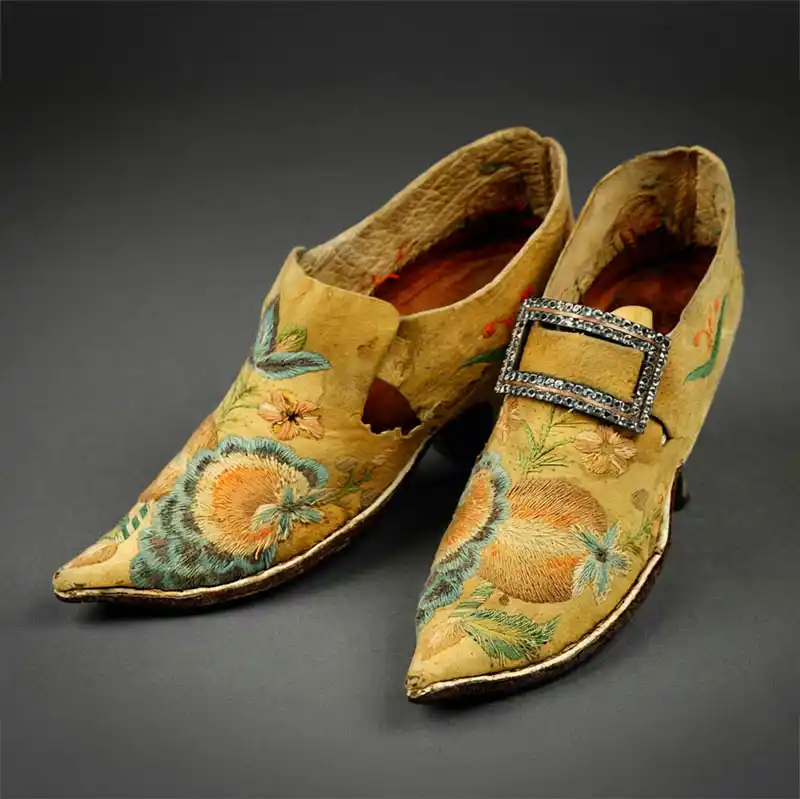
In the late Middle Ages, especially in the 15th century, beaked shoes were regulated by law as their extremely long laces became a social problem. Dress codes limited the length of laces according to social class, often to just 2 inches (about 5 cm) for most commoners, while nobles were allowed to wear them longer, but even for them, limits were set to curb excesses.
In the Baroque and Absolutist periods, heels were introduced - at that time reserved exclusively for men. Louis XIV then established red heels, which were only permitted at court. The background was simple: the red dye used for the aristocratic heels was obtained from cochineal insects, which made the color very expensive - a privilege that not many could afford. At the time of industrialization & technology, shoes became affordable as they were manufactured industrially. It was only at this time that standard sizes were introduced and a basic distinction was made between right and left shoes.
Avant-garde shoes are less an object of utility than an idea, statement and experiment. And yet we attach great importance to ensuring that the shoes we include in our range for you are wearable. You should feel comfortable when you slip into your shoes and they should complete your outfit. Shoes are a central point in every outfit and can change it immediately. From sporty and casual to extravagant and eye-catching, the shoe immediately changes the overall impression of the entire look.
The delivery of the spring/summer collections is in the starting blocks and Sort Aarhus and LOFINA have already made a start. LOFINA - a Danish label dedicated to just one thing... shoes of the highest quality with unique wearing comfort. Have you already discovered the new LOFINAs?