

















Sea turtles
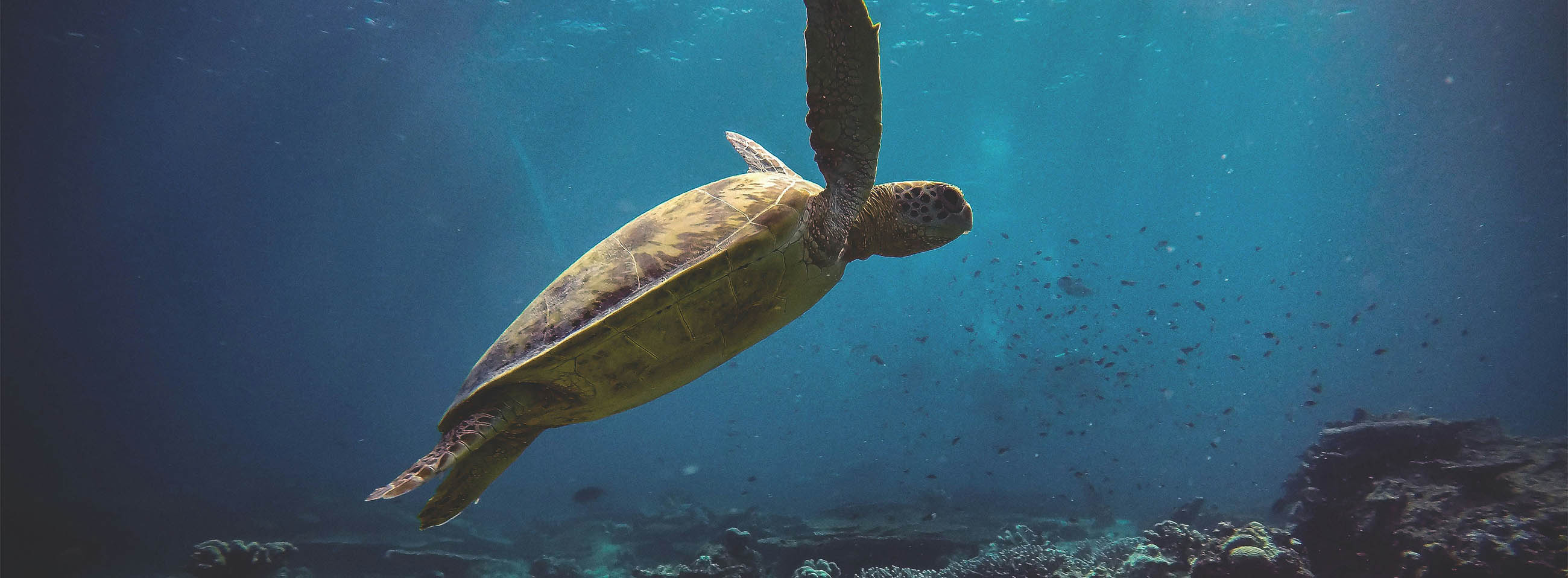
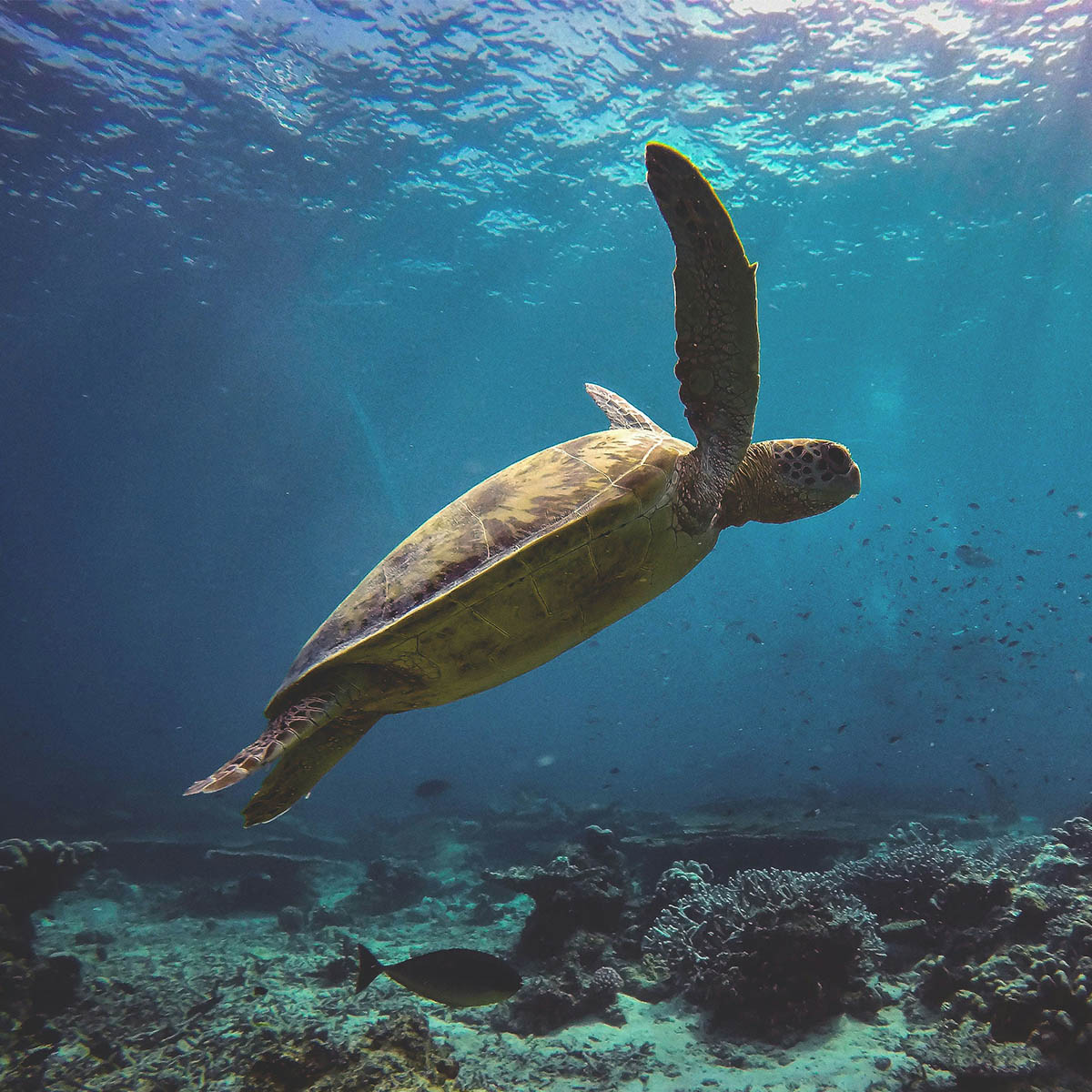
Sea turtles are absolutely fascinating creatures that have adapted perfectly to life in the water over the course of evolution.
With their streamlined shells and powerful fins, they move elegantly and almost weightlessly through our oceans.
There are seven species of sea turtle in our oceans:
• Leatherback turtle
• Australian green turtle
• Hawksbill sea turtle
• Green sea turtle
• Kemp's ridley sea turtle
• Pacific bastard turtle
• Loggerhead sea turtle
More information can be found HERE

Did you know that all sea turtles can travel incredible distances?
They travel thousands of kilometers to reach their nesting beaches.
A female turtle returns to her birthplace for the first time after about 20 to 30 years to lay her own eggs on the very beach where she once hatched.
The turtle lays its clutch (approx. 100 to 200 eggs) in the sand, seals it and then disappears again into the vastness of the ocean. It will not return to its nest; the sun and warmth of the sand take over the incubation of the eggs.
After around 49 to 62 days, the little baby turtles usually hatch at night and instinctively know that they have to make their way directly to the sea. They usually follow the moonlight, which is reflected by the sea.
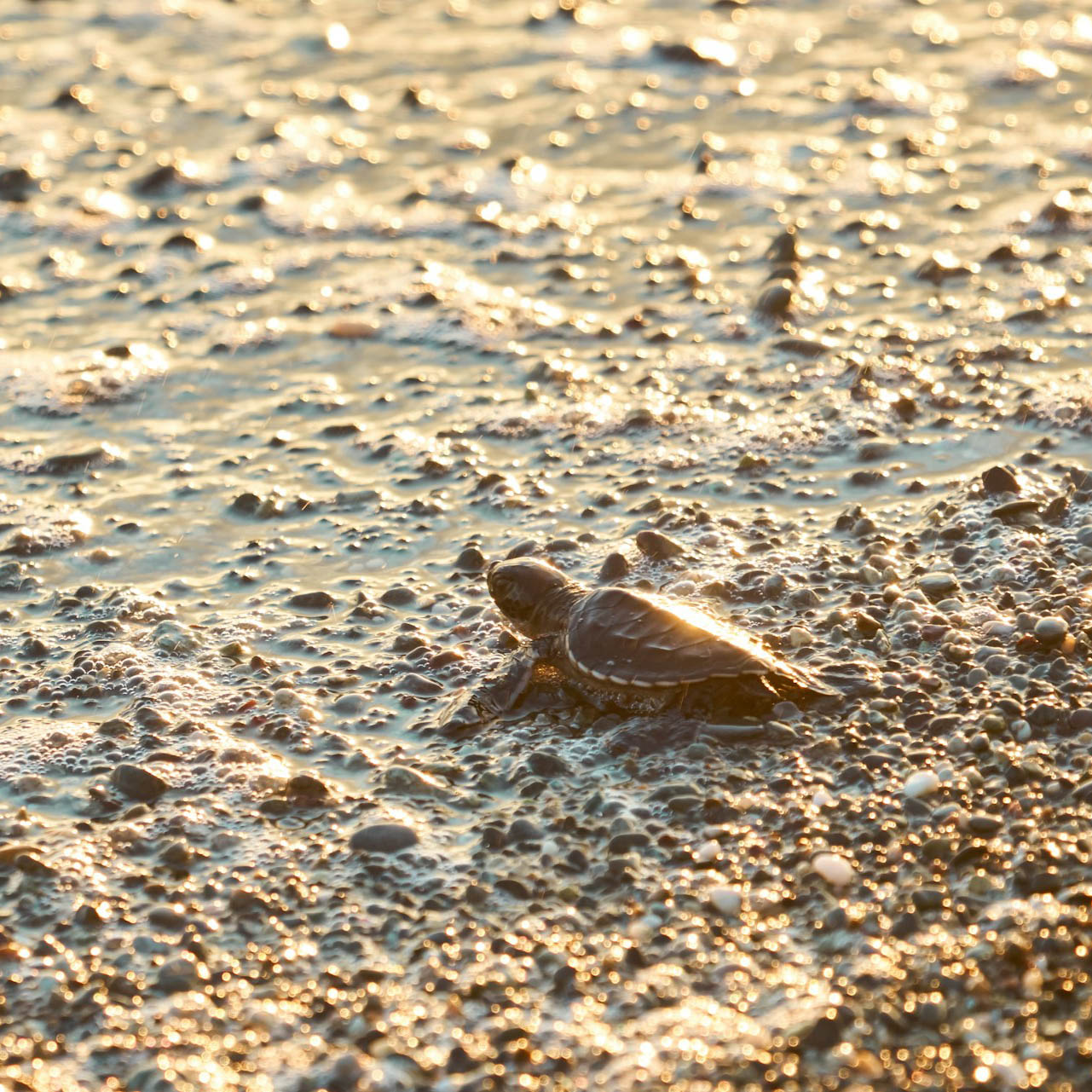

But how many of the thousands of hatchlings survive to adulthood?
Both on land and in the sea, a variety of dangers lurk for the approximately 6 cm small turtles.
Many are eaten by crabs, seabirds, squid and larger fish. Others die of starvation or disease.
For every 1000 turtles that hatch, only about one reaches adulthood.
Once a turtle is fully grown, it has hardly any enemies left. It only has to fear two enemies: sharks and humans.
Depending on the species, adult turtles can live to be at least 70 or even 100 years old. The largest species of sea turtle (the leatherback turtle) can weigh up to 700 kg and be 2.2 m long.
Sea turtles play an important role in the ecosystem by regulating algae stocks or keeping seagrass beds healthy.
Unfortunately, many species are already under massive threat from pollution, climate change and plastic waste in the oceans.
But what does that have to do with fashion?
You probably guessed it... Carsten Rundholz has dedicated part of his RUNDHOLZ BLACK LABEL collection to the special creatures of the oceans.
You will find the impressive animals on various prints of the season.